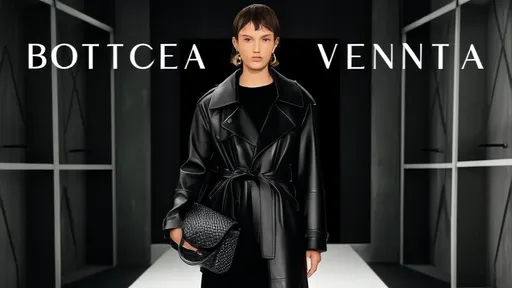
In the hushed corridors of luxury fashion, few appointments have been as quietly anticipated as that of Matthieu Blazy at Bottega Veneta. Stepping into the role following the departure of the charismatic Daniel Lee, Blazy represents not a rupture, but a subtle, profound evolution. His philosophy is not broadcast through loud proclamations or shock-value aesthetics; it is instead woven into the very fabric of the garments, whispered through the intricate intrecciato weave that has long been the house's signature. To understand Blazy's Bottega Veneta is to embrace a narrative of quiet intelligence, where the revolution is felt, not shouted.
The legacy he inherited was both a blessing and a challenge. Daniel Lee’s tenure was a meteoric success, reinjecting the Italian house with a potent, almost brutalist energy that captured the zeitgeist. Pouch bags, oversized green garments, and a distinct, Instagram-friendly identity became synonymous with the brand. Yet, Blazy’s approach diverges not in opposition, but in depth. Where Lee was exclamation, Blazy is a carefully placed comma—a pause for consideration. His debut collection, presented in February 2022, was a masterclass in this nuanced transition. There were no logos, no overt branding, just an obsessive focus on craftsmanship, material, and a quiet confidence that speaks volumes in an era of sensory overload.
At the core of Blazy's creative philosophy lies a reverence for the artisan. He is not a designer who sees himself as a solitary genius imposing a vision from on high. Instead, he positions himself as a collaborator, a conduit for the exceptional skills of the atelier. He speaks of the "intelligence of the hand," a belief that the true magic of fashion happens in the dialogue between a designer's sketch and the artisan's interpretation. This is perhaps most evident in his approach to leatherwork. Bottega Veneta's intrecciato technique, a meticulous weaving of leather strips, is not treated as a historical relic to be trotted out for heritage campaigns. Under Blazy, it is a living, breathing language. He experiments with its scale, its application, and its materiality, transforming it from a signature into a storytelling device.
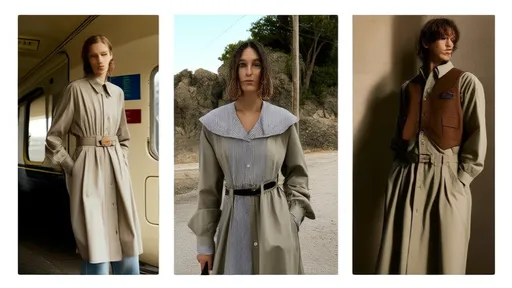
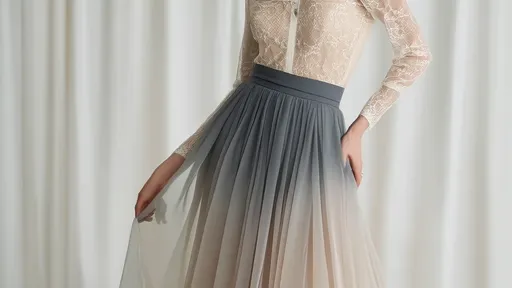
This deep respect for materiality extends beyond leather. Blazy is a sensualist of textiles. He finds narrative in the weight of a wool, the drape of a silk, the technical innovation of a new knit. His collections are a tactile journey. One must imagine touching the clothes to truly appreciate them: the butter-soft shearling coats that resemble cartoon clouds, the trompe l'oeil garments that look like simple cotton but reveal themselves as exquisite leather, the fluid dresses that move with a life of their own. This is fashion that prioritizes the wearer's experience over the observer's glance. It is clothing designed for the intimate pleasure of feeling impeccably well-dressed, rather than for the distant admiration of a street-style photographer.
Furthermore, Blazy is quietly redefining what luxury means in a post-pandemic world. In an industry still grappling with the pendulum swing between comfort and spectacle, he offers a third way: considered elegance. His clothes are not sweatpants, nor are they unwearable art pieces. They are fundamentally, beautifully, and intelligently wearable. There is a practicality to his fantasy. A beautifully tailored coat is not just an object of desire; it is a companion for life. A pair of jeans—a seemingly mundane item—is elevated to an objet d'art through construction and detail, yet remains, unequivocally, a pair of jeans. This is perhaps his most radical act: making the ordinary extraordinary without losing its essence, proving that true luxury lies in perfection of the familiar.
The Blazy woman and man are not defined by a specific age, profession, or even attitude. They are defined by a mindset. They are the discreetly discerning individuals who need no external validation through logos. They understand codes and quality. They appreciate the joke of a "denim" look crafted from calfskin or the sophistication of a dress that appears simple from afar but reveals astonishing detail up close. They are, in essence, confident enough to let their clothes speak softly, knowing that those who understand will listen. This builds a different kind of community around the brand—one based on mutual appreciation for subtlety rather than collective allegiance to a trending item.
In an industry obsessed with the new, the now, and the next, Matthieu Blazy’s deliberate pace is itself a form of rebellion. His is not a philosophy built for the relentless churn of the fashion calendar. Each collection feels like a chapter in a longer, continuous novel, building upon the themes of the last. There is a coherence and a maturity to his vision that suggests a long-term project of refinement rather than a series of seasonal disruptions. This approach fosters a deeper, more enduring connection with the audience. It asks for patience and attention, rewarding those who are willing to look beyond the surface.
Ultimately, the quiet revolution Matthieu Blazy is leading at Bottega Veneta is a recalibration of values. In a world shouting for attention, he champions whisper. In a market flooded with products, he advocates for purpose. In an era of disposable trends, he insists on permanence. His创作哲学 (creative philosophy) is a powerful reminder that the most impactful statements are often made without saying a word. They are encoded in the precision of a stitch, the choice of a material, and the integrity of a silhouette. Bottega Veneta, under his guidance, is no longer just a maker of luxurious goods; it is a testament to the enduring power of quiet, intelligent, and breathtakingly beautiful design.

By /Aug 21, 2025
By /Aug 21, 2025

By /Aug 21, 2025
By /Aug 21, 2025

By /Aug 21, 2025
By /Aug 21, 2025

By /Aug 21, 2025

By /Aug 21, 2025

By /Aug 21, 2025

By /Aug 21, 2025

By /Aug 21, 2025

By /Aug 21, 2025

By /Aug 21, 2025

By /Aug 21, 2025
By /Aug 21, 2025
By /Aug 21, 2025
By /Aug 21, 2025
By /Aug 21, 2025

By /Aug 21, 2025
By /Aug 21, 2025