In an unexpected yet impactful crossover between global philanthropy and popular culture, Microsoft co-founder Bill Gates made a rare appearance on a popular South Korean variety show this week. The tech luminary turned global health advocate sat down for an extended interview segment that blended lighthearted moments with serious discourse on climate change and philanthropic initiatives.
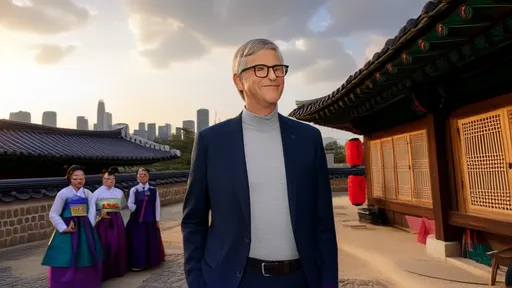
The appearance, filmed in Seoul against the backdrop of Gates' ongoing work with Korean partners in technology and health sectors, marked one of the most accessible media engagements the billionaire has undertaken in recent years. Dressed casually and engaging warmly with hosts, Gates demonstrated his evolving approach to reaching broader audiences with his urgent messages about planetary health and equitable development.
During the nearly hour-long segment, Gates spoke with remarkable candor about the accelerating climate crisis, framing it not as a distant threat but as an immediate challenge requiring unprecedented global cooperation. "What many people don't realize," Gates remarked while maintaining eye contact with his hosts, "is that climate change isn't just about polar bears or melting glaciers—it's about crop failures today, about respiratory illness in urban centers, about economic displacement that affects the most vulnerable communities first and hardest."
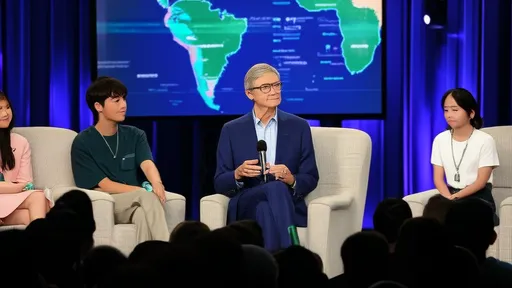
The conversation took an innovative turn as Gates employed visual aids and simple analogies to explain complex climate mechanisms to the show's diverse viewership. At one point, he used props from the studio kitchen to demonstrate how greenhouse gases trap heat in the atmosphere, drawing spontaneous applause from the studio audience for making the science both accessible and memorable.
When the discussion shifted to philanthropy, Gates revealed insights about the Gates Foundation's evolving strategy, particularly its increased focus on climate adaptation technologies for developing nations. "Philanthropy alone cannot solve these challenges," he acknowledged, "but it can take risks that governments and businesses cannot—funding bold ideas, supporting unproven but promising technologies, and ensuring solutions reach those who need them most regardless of profitability."
The billionaire specifically highlighted South Korea's growing role in both technological innovation and global health leadership, praising Korean companies and research institutions for their contributions to vaccine development and clean energy solutions. This recognition resonated strongly with the domestic audience while reinforcing Gates' message about the necessity of international collaboration.
What made the appearance particularly noteworthy was Gates' willingness to participate in the show's characteristic format—including brief interactive segments that saw him tasting Korean foods while drawing parallels between culinary traditions and agricultural sustainability. These moments of cultural exchange provided natural transitions between heavier topics, creating what media analysts are calling a masterclass in science communication.
The timing of the appearance appears strategic, coinciding with increased Gates Foundation engagement across Asia and growing international pressure for wealthier nations to contribute more substantially to climate mitigation efforts. By choosing a popular entertainment platform rather than traditional news media, Gates effectively bypassed political filters and spoke directly to a massive, predominantly younger demographic that conventional climate communication often struggles to reach.
Social media response to the segment has been overwhelmingly positive, with clips from the interview gaining millions of views across multiple platforms within hours of broadcast. Many comments specifically noted how Gates' demeanor—simultaneously authoritative and approachable—helped demystify topics that often feel abstract or overwhelming to non-experts.
Media scholars are already pointing to the appearance as a potential blueprint for other thought leaders seeking to engage with public audiences outside traditional intellectual echo chambers. The successful integration of serious global discourse into an entertainment format demonstrates how carefully crafted messaging can achieve both breadth and depth of impact.
As the interview concluded, Gates left the audience with a characteristically direct challenge: "The solutions to our biggest problems already exist in laboratories and research institutions around the world, including here in Korea. What we need now is the political will, the private investment, and the public pressure to implement them at scale. Every person who understands these issues becomes part of the solution."
The segment represents another step in Gates' ongoing evolution from software executive to global statesman, demonstrating his increasing sophistication in leveraging diverse media platforms to advance his advocacy goals. While some critics question the appropriateness of discussing existential threats in entertainment settings, most communication experts agree that meeting audiences where they are represents the most promising path toward building the broad consensus necessary for meaningful action.
As climate communication continues to evolve beyond scientific journals and international conferences, Gates' Korean variety show appearance may well be remembered as a watershed moment—when the conversation about our planetary future successfully jumped from boardrooms to living rooms, and from policy papers to popular culture, without losing any of its urgency or importance.

By /Aug 22, 2025
By /Aug 22, 2025

By /Aug 22, 2025

By /Aug 22, 2025

By /Aug 22, 2025

By /Aug 22, 2025

By /Aug 22, 2025

By /Aug 22, 2025

By /Aug 22, 2025

By /Aug 22, 2025

By /Aug 22, 2025

By /Aug 22, 2025

By /Aug 22, 2025

By /Aug 22, 2025

By /Aug 22, 2025

By /Aug 22, 2025
By /Aug 22, 2025

By /Aug 22, 2025
By /Aug 22, 2025
By /Aug 22, 2025